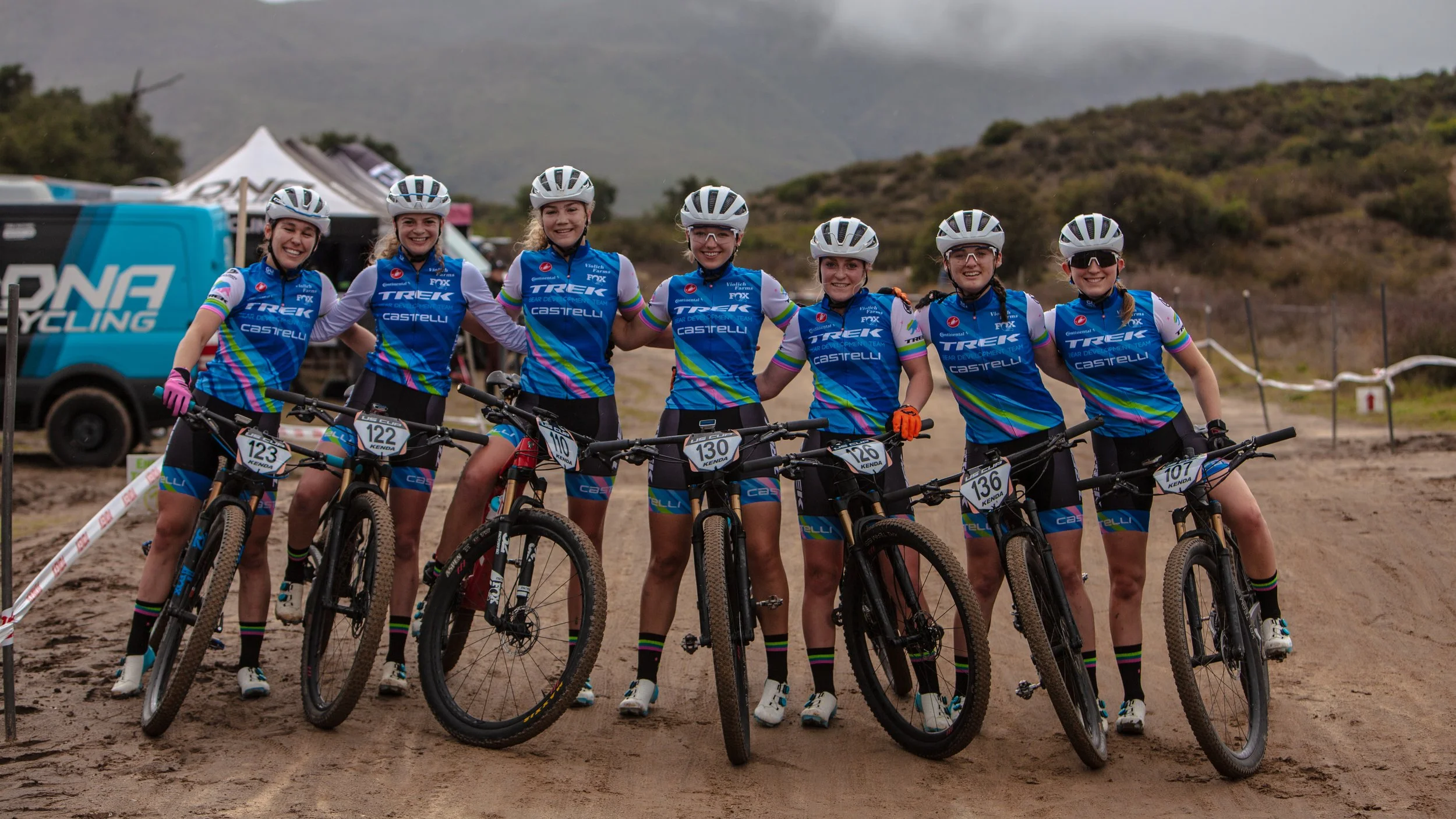
American Development Cycling
How development teams are changing opportunities for athletes
“Our most important final project product is producing an athlete that is well-rounded understands dedication, understands commitment … and one that has gained some independence from racing on their own and traveling independently from their parents on a team.”
Julia Violich, Director - Bear National Team
Cycling is far from your usual international sport. Rarely do we see sports that start off for many of us as a form of transportation to school, work, or around town. For some, cycling is something deeper. It’s a source of passion, pride, and personal fulfillment. When baseball fans go to a ball game at their favorite field, they often spend several hundred dollars on tickets alone, sometimes thousands just to break out of the nosebleeds.
Cycling is different; there are no tickets, no designated seating, no hours of continuous entertainment. Cycling is one of the few sports where you will see passionate fans scale the side of a mountain to catch a glimpse of the peloton as it flashes by. In some cases, fans camp out by the side of the trail to watch their favorite mountain bike athletes zoom past for a split second at a time, catching no more than a minute per lap of racers speeding by.
This dedication is what makes cycling so interesting. Even as a casual fan, it is possible to appreciate the level of effort and dedication some fans invest in the sport. Oftentimes, however, the most dedicated of fans will see new names on their favorite team’s roster and question where they came from. Where did these athletes develop the skills to get to the top of the competition? Why have their names never reached the screen before? This is where cycling contrasts with many other sports; the development stage is an essential part of a cyclist's career, yet it receives almost no coverage in the cycling world.
Unlike college football, which oftentimes has viewership numbers that eclipse that of the NFL, Under-23 cycling rarely gets the coverage the category deserves. Covering everything from up-and-coming 15-year-old talents to next year’s “Neo-Pros” (Newly minted professional cyclists), the development stage in cycling is the window into the future of the sport. This is where the Bear National Team resides, shaping promising talent from across the United States into the next generation of professional cyclists.
Founded in 2011 by Stu Bone in Kentfield, California, Bear National has operated as a leading example for young athlete development. Originally founded to provide an opportunity for young Under-18 talent, the team expanded in 2017 to include Under-23 athletes in an “Elite” team. In 2013, Bone was joined by Chris Burnham and current director Julia Violich. Since then, the team has expanded its roster from 10 riders in 2011 to more than 50 student-athletes pursuing a career in professional cycling.
Bear National Team’s successes speak for themselves, with more than 40 athletes from the team being named to the USA Cycling national team to represent the United States in both national and international events. The team also has a plethora of awards to its name, with Bear athletes winning National Road and Mountain titles on a regular basis.
The team attributes much of its success to its value and goal-driven approach to training and racing, emphasizing the importance of relationships between team members, sponsors, and staff to ensure success. Most importantly, however, the team underlines the importance of enjoying the sport and having fun no matter the circumstance.
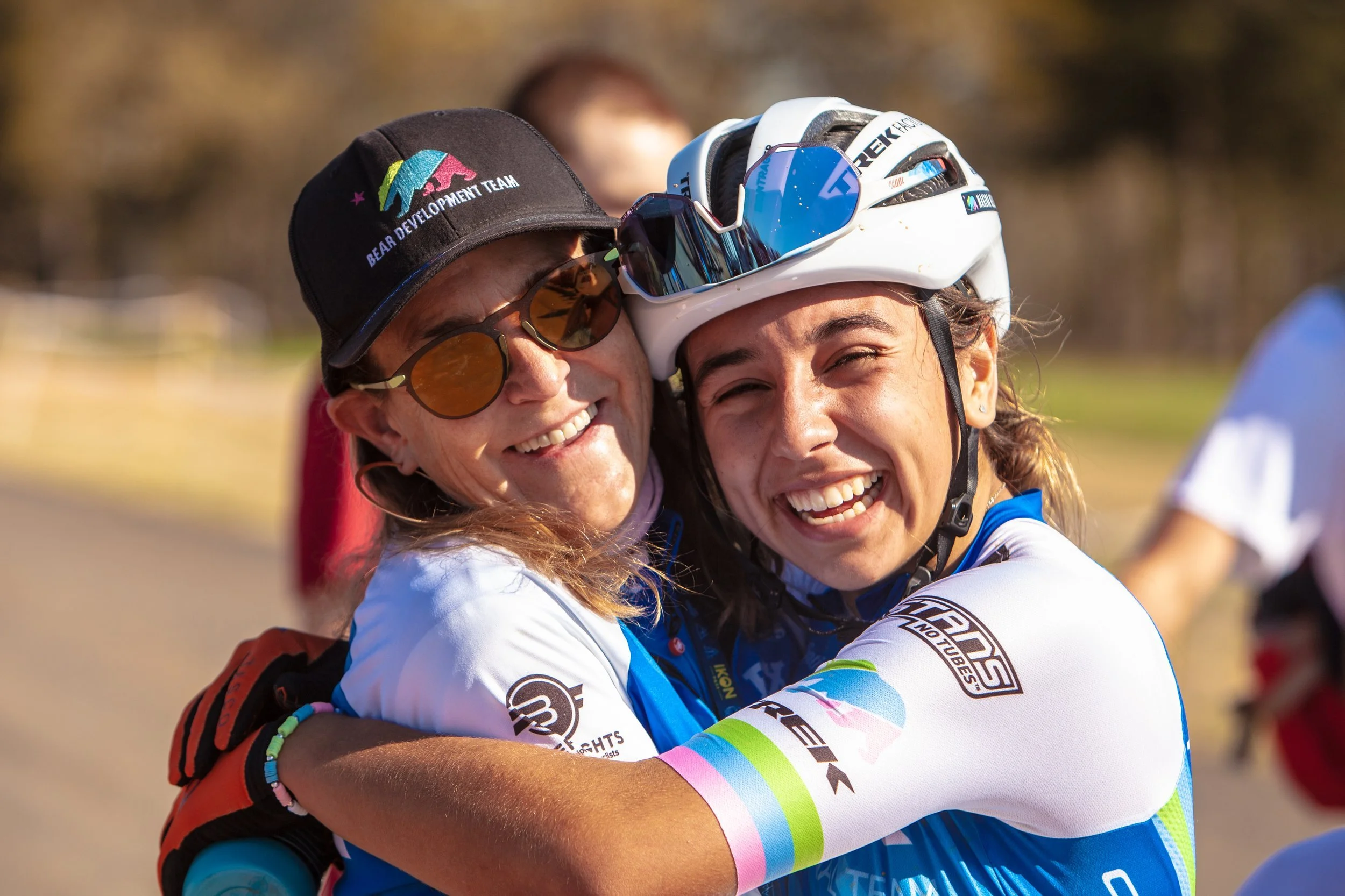
The Team
“Julia has really changed cycling for juniors … there's no one really like Julia that's out there helping every single kid try and succeed.”
Ruth Holcomb, U23 Elite Womens Rider
Selecting and growing young talents is an essential part of any sports industry, where the information and training presented to young athletes directly impacts the future of the sport. Bear National Team thrives in this space, utilizing years of experience in the professional cycling industry and directing it at growing cycling talents.
Athlete development in cycling is broad, with programs ranging from Under-14 to Under-23 programs such as Bear. However, they all operate in the same ecosystem, feeding off each other and developing the process as a collective organism.
Cycling development has not had a very deep history in the United States. Oftentimes, homegrown American talents would make their way across the US and Europe for the summer race season, hitchhiking and riding through the countryside. Riders would show up with their racing license and jump on the start line with whatever experience they had.
Today, however, American development cycling sees teams from across the US form rosters of promising young talent, sending them to races that best suit their potential and their brand. With athletes and events popping up across the United States once more, the development stage in professional cycling is gaining more speed than ever before.
The American cycling industry did not always look as it does today, with few teams and domestic events worth the attention of major broadcasters. When the American cycling scene was only beginning to take off in the 90s, it greatly resembled the European cycling scene that had been blossoming for years already. The United States was packed full of riding opportunities for young cyclists, both male and female.
“Back in the day when I was racing, there was a plethora of teams. Every single, every single car manufacturer had a team.” Bear Director and former racer Julia Violich noted, “It was unbelievable.”
Julia Violich has long been involved in the cycling community, with her roots stemming from her racing career in the early 2000s which saw her win multiple National Titles.
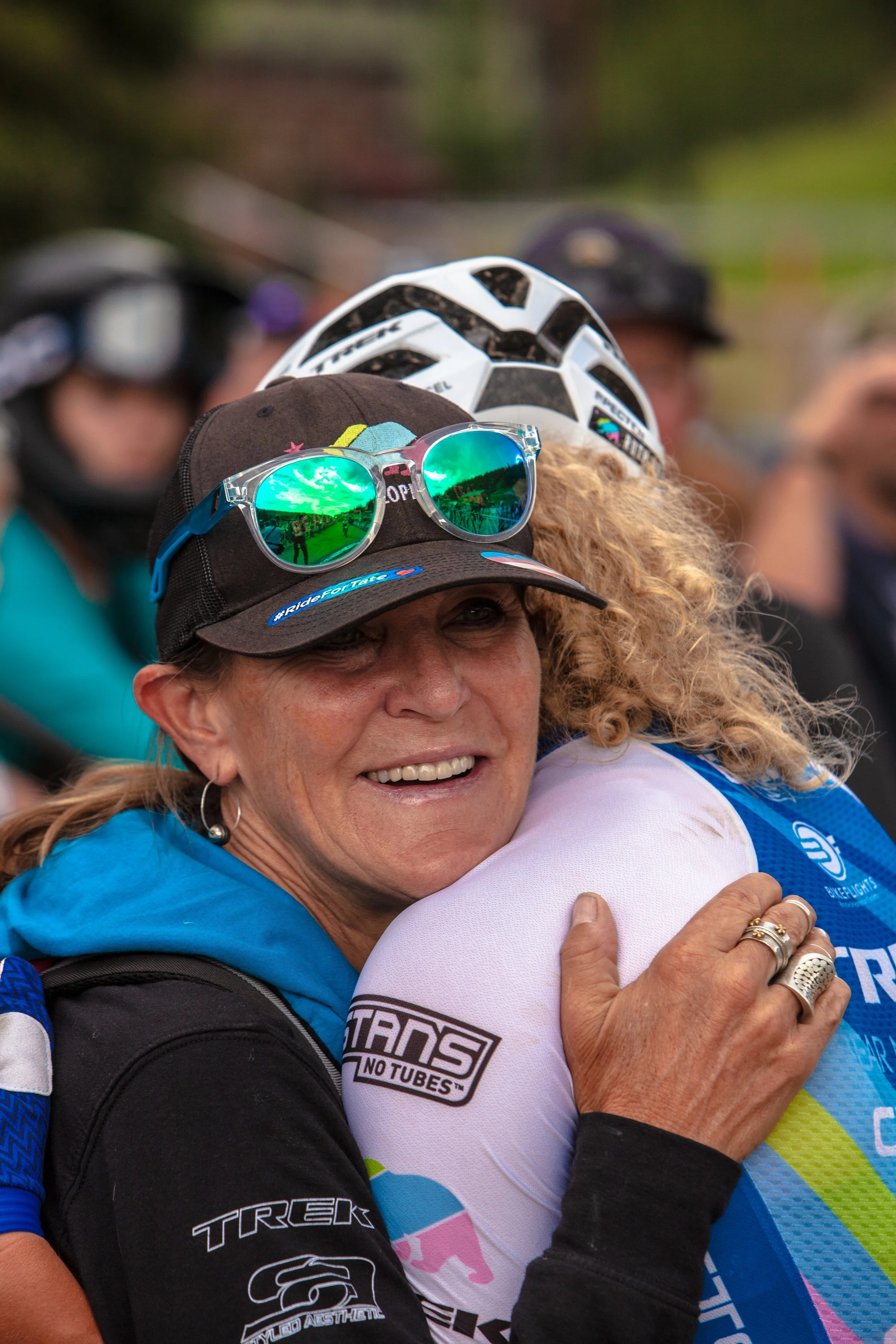
Julia Violich hugs U23 Womens rider Ruth Holcomb following her race at the 2021 Mountain Bike National Championship in Winter Park, Colorado.
[Photo: Alec Levy-O’Brien]
“It was kind of a new, exciting sport and people didn't want to miss the opportunity and they were all over it,” Violich notes that that excitement over the sport seems to have dwindled out in the United States, with a new push for more mainstream sports such as Football being more present in today’s youth. At the start of the US cycling boom of the 90s, few athletes knew much about the cycling world.
“Who knew bike racing even existed?” Julie Young, a sports physiologist and former member of the US National Cycling Team said. “I totally stumbled on it.” Young took an unusual route to the cycling scene, graduating college before getting her start in the racing scene. While working in the finance sector in California, Young met a couple of colleagues who moonlighted as bike racers for the 7-Eleven Cycling Team who regaled her with tales from the cycling world.
“I ran to the bike shop the next day and got a license and just started racing,” Young said.
These were the heydays of American cycling, where anyone with a bike could purchase a license and show up to a race the next day and get fully enveloped in the sport. Young would go on to have an extremely successful racing career, spending 12 years as a member of the US National Team from 1991 through 2002.
While the cycling movement in the US has seen a decline, the opposite is the case in Europe, where development teams and professional opportunities are seemingly everywhere. Violich believes this to be partially due to federal funding and involvement in the sport.
While Team USA has recently featured some incredible talents such as Kate Courtney (Scott-SRAM) and Riley Amos (Trek Factory), they are often outmatched in both performance and preparedness at the international level. Violich notes that since the sport of Mountain Biking has hit the Olympic stage, European countries have invested significant resources into national teams.
“We don't have that in the United States, which is very unfortunate,” Violich said.
This is where the American development market steps up to the plate. The space left by the US National and big-name domestic teams has been picked up by development teams such as Bear. “I do think people are not going to be able to, you know, ignore what we're doing here.”
Much of European cycling benefits from a different style of investment as well. While almost all teams working in the cycling industry require significant financial investment from corporate and private sponsors, the level of engagement from sponsors supporting European teams is at a whole other level when compared to American investment.
Rob Evans, a former professional cyclist who has worked with the Bear Development Team as an advisor, believes the difference in support stems from cultural attitudes toward the sport and the level of marketability a cycling team can be characterized by.
“If someone's going to spend money on a market, it's easier than ever to have a tangible, provable ROI (Return On Investment),” Evans said, “The rolling billboard model of cycling just doesn't cut it anymore … you're really at the mercy of, of the patrons of the sport.“
Evans also noted that the majority of those patrons seem to be located outside of the United States, leaving a few teams scrapping for a handful of willing investors to pick up the bill. This could be due to the change in attitude towards cycling in the American Market after Lance Armstrong’s doping scheme came to light. Armstrong’s admission to cheating took a costly toll on the American cycling industry, causing many US bases sponsors to separate themselves from teams and leaving a significant funding gap at all levels of the sport.
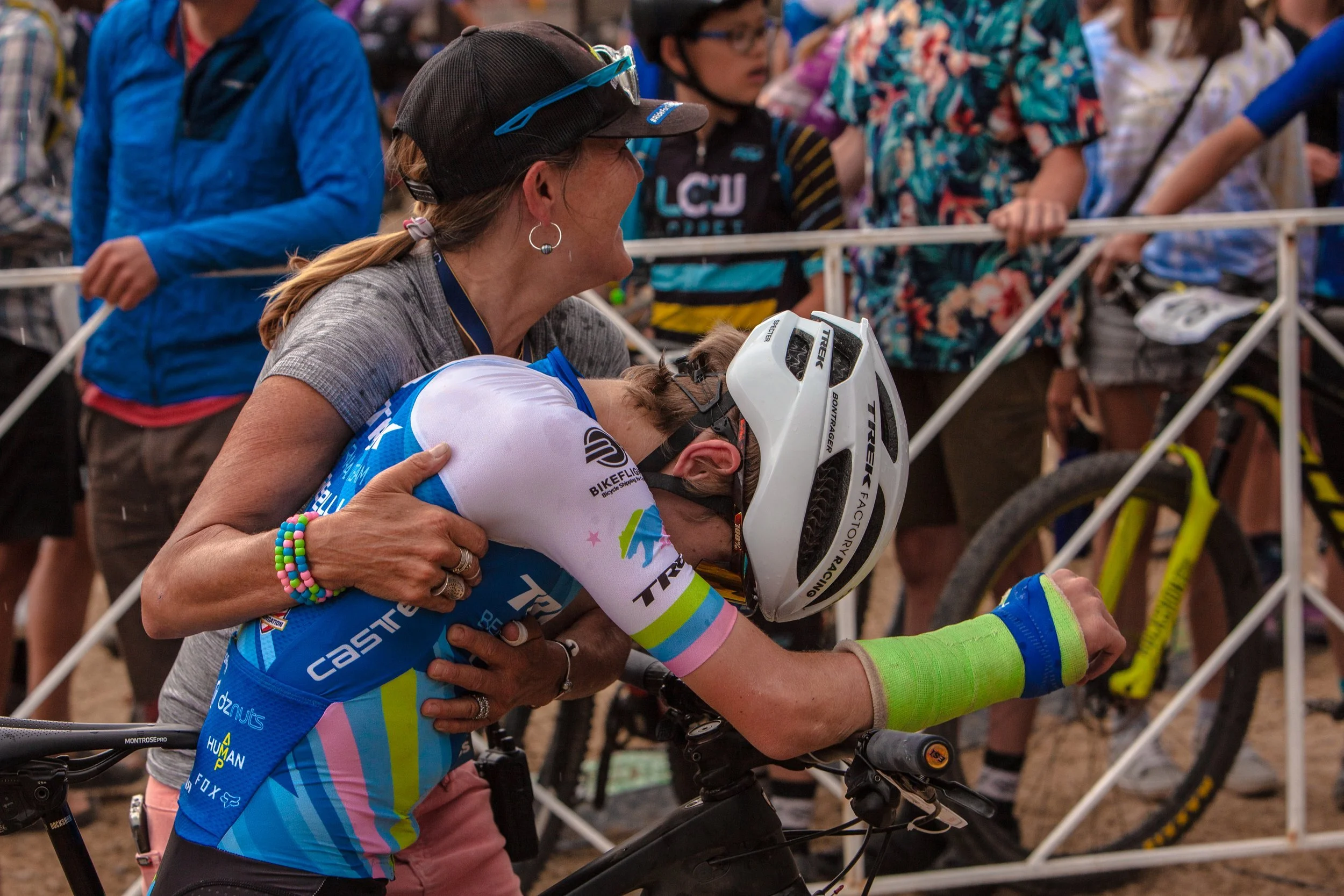
Julia Violich congratulates 15-16 Men’s rider Nico Konecny after his win at the 2021 Cross Country National Championships in Winter Park, Colorado. Konecny sustained a broken wrist earlier in the season and elected to race despite the injury.
[Photo: Alec Levy-O’Brien]
This is where the American development market steps up to the plate. The space left by the US National and big-name domestic teams has been picked up by development teams such as Bear.
“I do think people are not going to be able to, you know, ignore what we're doing here,” Violich said.
This is where Bear has thrived in the 2010s, picking up the slack in the development chain that USA Cycling has left. A strong development chain exists in many European programs in a very similar process to American Baseball, with clear-cut leagues that funnel athletes from youth teams into the professional sector in a very structured manner.
While in the US some of these cycling leagues exist, the majority of them are supported by private investors and charitable organizations. The National Interscholastic Cycling Association (NICA) is one of these leagues. Created in Northern California in 2009, NICA was formed to provide an opportunity for students who never felt the call to more traditional sports.
Through NICA, statewide high school cycling leagues were created, where high school teams could compete against each other in a professionally organized format. This program allows students to gain exposure to the outdoors while taking an active role in the sport they are partaking in.
“We tend to serve a lot of kids who haven’t been interested in sports or who haven’t been drawn to stick and ball sports, which are normally the sports that are offered at high school,”
— Vanessa Hauswald, director of the Northern California NICA cycling program.
Source: Bear National Team
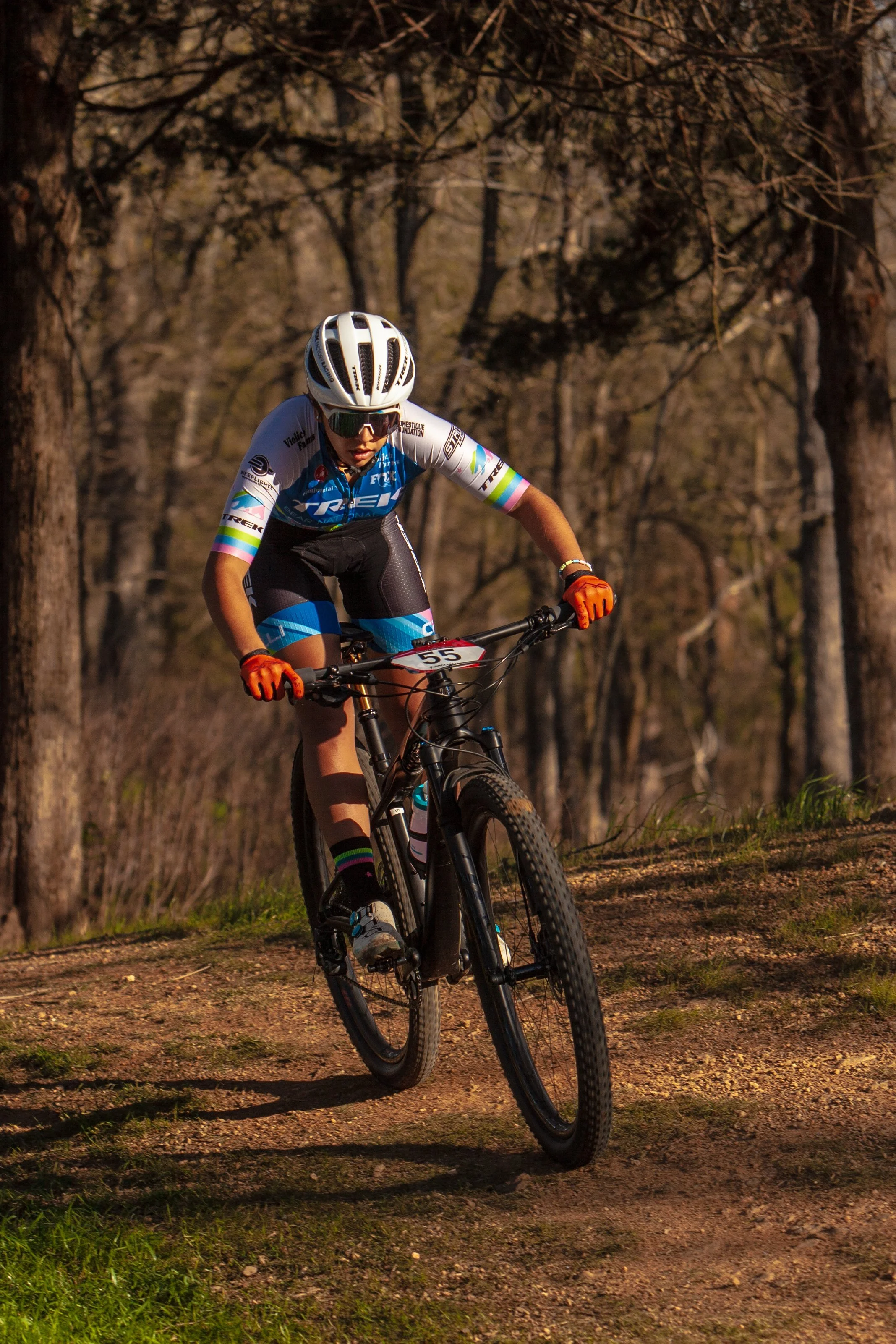
Junior 17-18 rider Makena Kellerman rips around a corner at the 2021 Oz Trails MTB Cup in Fayetteville Arkansas.
[Photo: Alec Levy-O’Brien]
Hauswald’s cycling program was the first program in the NICA leagues and has set an example for the rest of the leagues in the program.
As of the end of 2020, NICA had more than 25,000 students participating in leagues across the US in both High School and Middle School leagues. According to NICA’s 2020 Annual Report, the league was experiencing a 19% increase in student participation and had 21% of total athletes identify as female at the start of the COVID-19 Pandemic.
Hauswald has pushed NorCal even further, with a 30 / 70 split in gender participation. Hauswald attributes this to their efforts in hiring female coaches and maintaining a “No Cuts, No Bench” philosophy within the league.
“I think that the no bench, no cuts thing is a really big deal,” Hauswald said, “the only requirement was that they tried their hardest and to show up.”
The NorCal League has also worked to push through socioeconomic barriers. Cycling has a notoriously high cost of entry across the board. However, thanks to strategic partnerships with brands such as Specialized, NICA, and NorCal have been able to provide bikes to kids who otherwise could not afford them. Additionally, NorCal is also working to create more races in urban areas.
“Let's bring the opportunity to them where they can ride within a bus or drive from home the same day, Hauswald said.
The league has noticed an increase in interest from many cities in California’s central valley and wants to create more opportunities for these students to get involved in the sport.
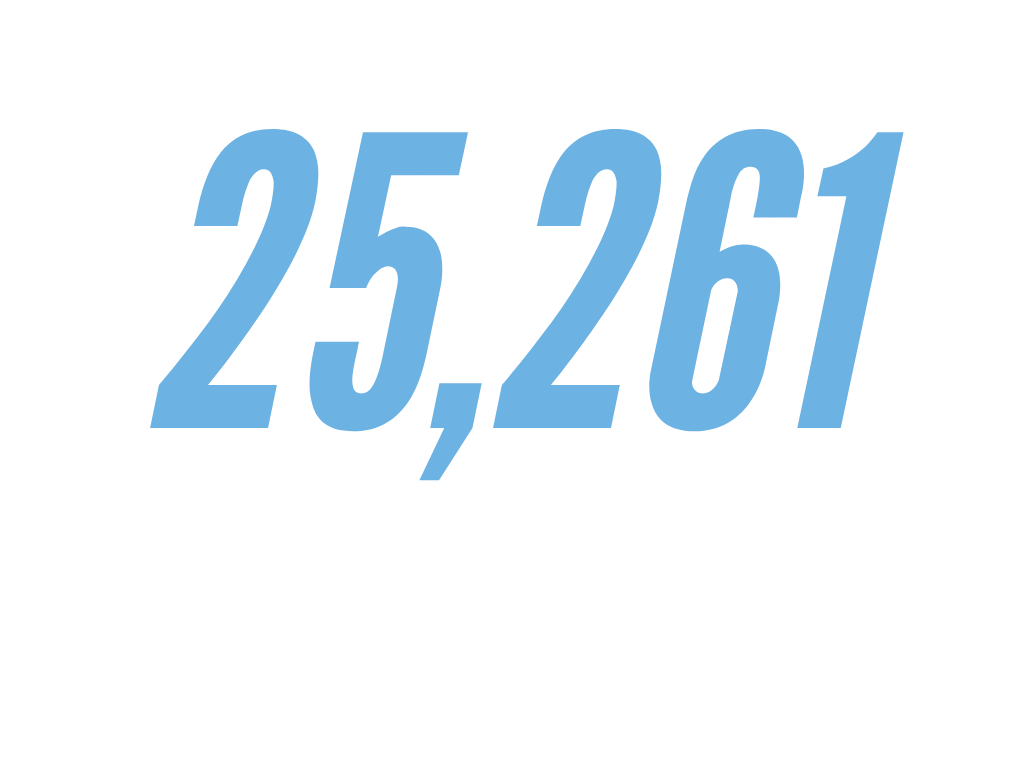
Source: NICA 2020 Annual Report
Leagues such as NorCal also serve a crucial role in the development stage in professional cycling. With the expansion into middle school leagues, NICA has begun to offer opportunities to athletes who are interested in the sport. This provides a crucial opportunity for developing an interest in the sport for future generations, one that Hauswald compares to that of Baseball’s junior leagues.
“I wish there were more of a continuum in cycling. Honestly, I've always felt like we need the little league baseball model.” Hauswald said. In many European countries, nationally funded junior programs and leagues exist to foster this interest in the sport.
“You can go from a little league, all the way through to pros and baseball, and that's why it's such a complete part of American culture.”
While NorCal and NICA are filling this gap, Hauswald and Julia Violich agree that there is plenty of room for improvement from USA Cycling (USAC). Much of the slack being left by USAC programs is also being taken up by Violich’s Bear National Team. While NICA operates as a sort of T-Ball or Farm League, Bear operates as a AAA Baseball team; the last step required before hitting the professional levels of the sport.
Bear provides an array of products to its athletes, ranging from world-class coaching to industry-leading technology. However, Violich contends that the thing her athletes are experiencing is less about showcasing their skills and more about learning how to become professional athletes off of the track.
“I think primarily they're learning to self-promote, be their own business managers, be their marketing manager, brand manager,” Violich said.
While it is incredibly important that the riders are getting the racing experience that will shape their careers and expose them to international competition, Violich affirms that it is paramount that they understand how to represent cycling culture as being humble, gracious, and kind. “They're also learning to hold their own,” Violich says.
This is something that Hauswald says stands out about Bear’s athletes.
“Every podium is stacked with Bear kids, but they also know how to shake people's hands,” Hauswald said. “They know how to look people in the eye. They know how to be genuine.”
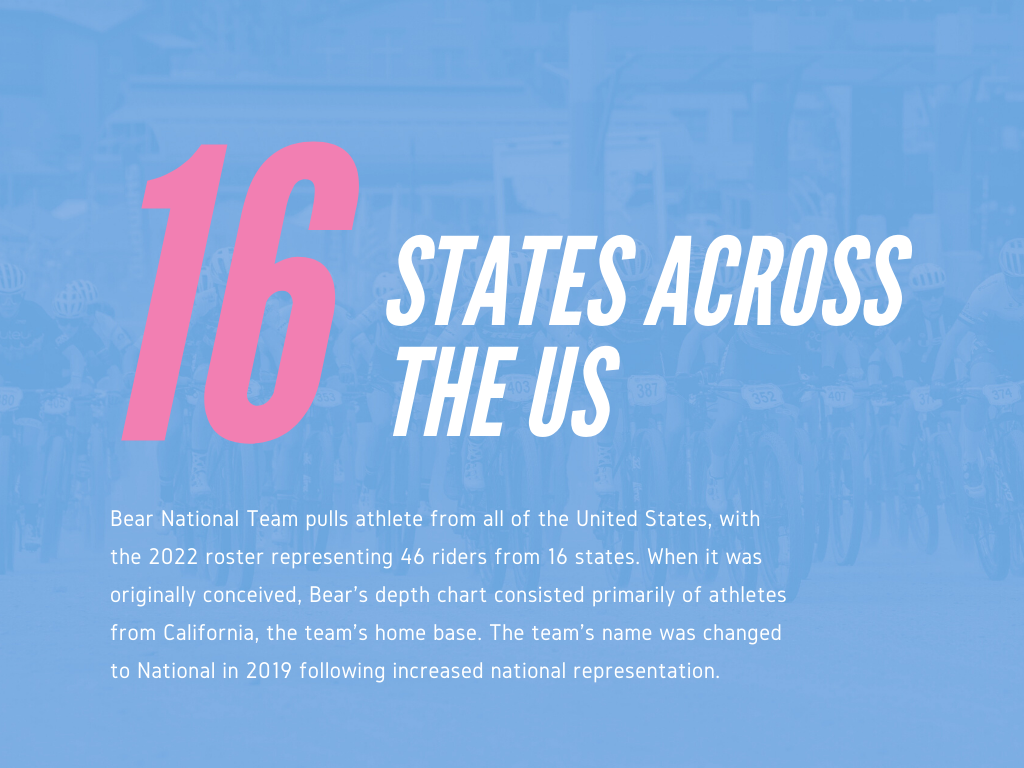
This is something that Bear does very well, and very intentionally. Violich says that the team has two primary products that they offer to their riders. First and foremost, they want to ensure every rider on the team can enjoy the sport and doesn’t get burnt out by the rigors of training and competition. Second, and arguably the most important, is that athletes understand the professional world.
“Our most important final project product is producing an athlete that is well-rounded, understands dedication, understands commitment,” Violich said. “I provide them with seeds of inspiration that I depend on them to do their own negotiation and do their own self-advocacy.”
Violich and Bear are acting as that final stepping stone before the professional level of cycling. Offering an opportunity to young athletes, shaping them into conscientious human beings, and allowing their abilities to speak for themselves on an international playing field. Bear has continuously pushed for increased opportunities both on and off the bike for its riders.
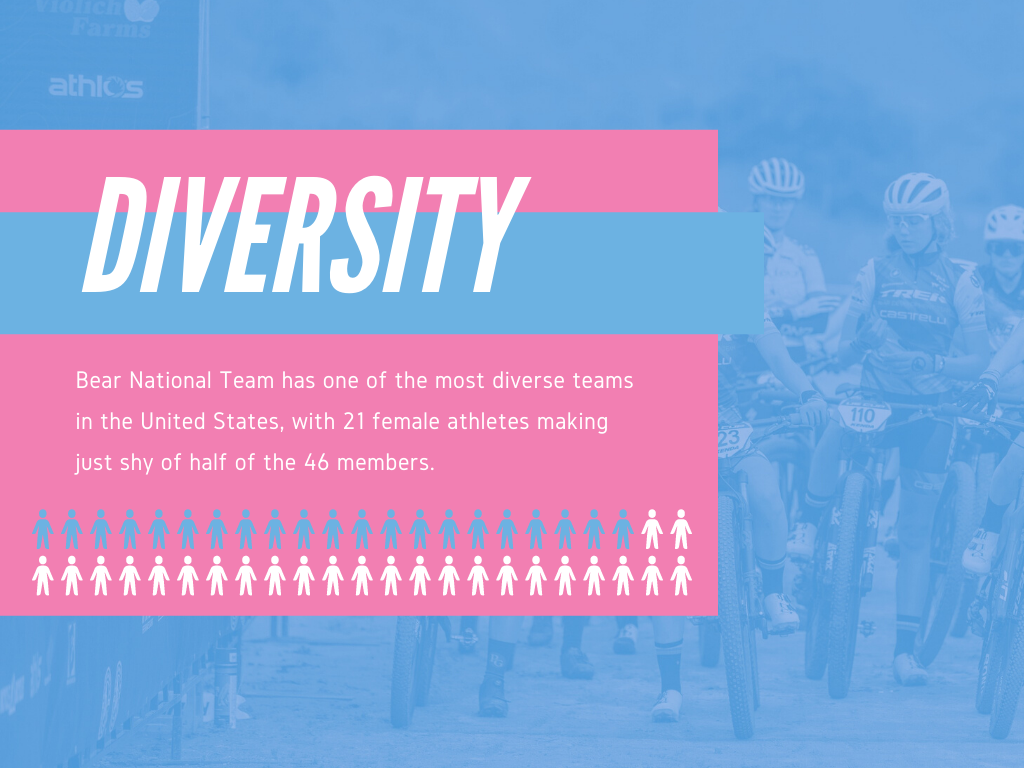
Source: Bear National Team
As it sits today, Bear has a strong field of 46 riders. Of those, 21 are female riders, meaning Bear is one of the most diverse teams racing in the US today. Despite this, Bear is still fighting an uphill battle against a growing reality. There are very few opportunities for talented young women, with a stacked competition fighting for a handful of professional spots on the international stage.
“Women see–kind of–the writing on the wall and think, oh, maybe I should focus really on college and getting a degree and going to work, which is in my opinion, sad,” Violich said, “I would just encourage people to continue to provide opportunities for women.”
The Riders
“The competition, it's just not about that. It's more personal growth… I think what it does for you as an individual and confidence and character development, all those things that you carry with you.”
— Julie Young, Sports Physiologist
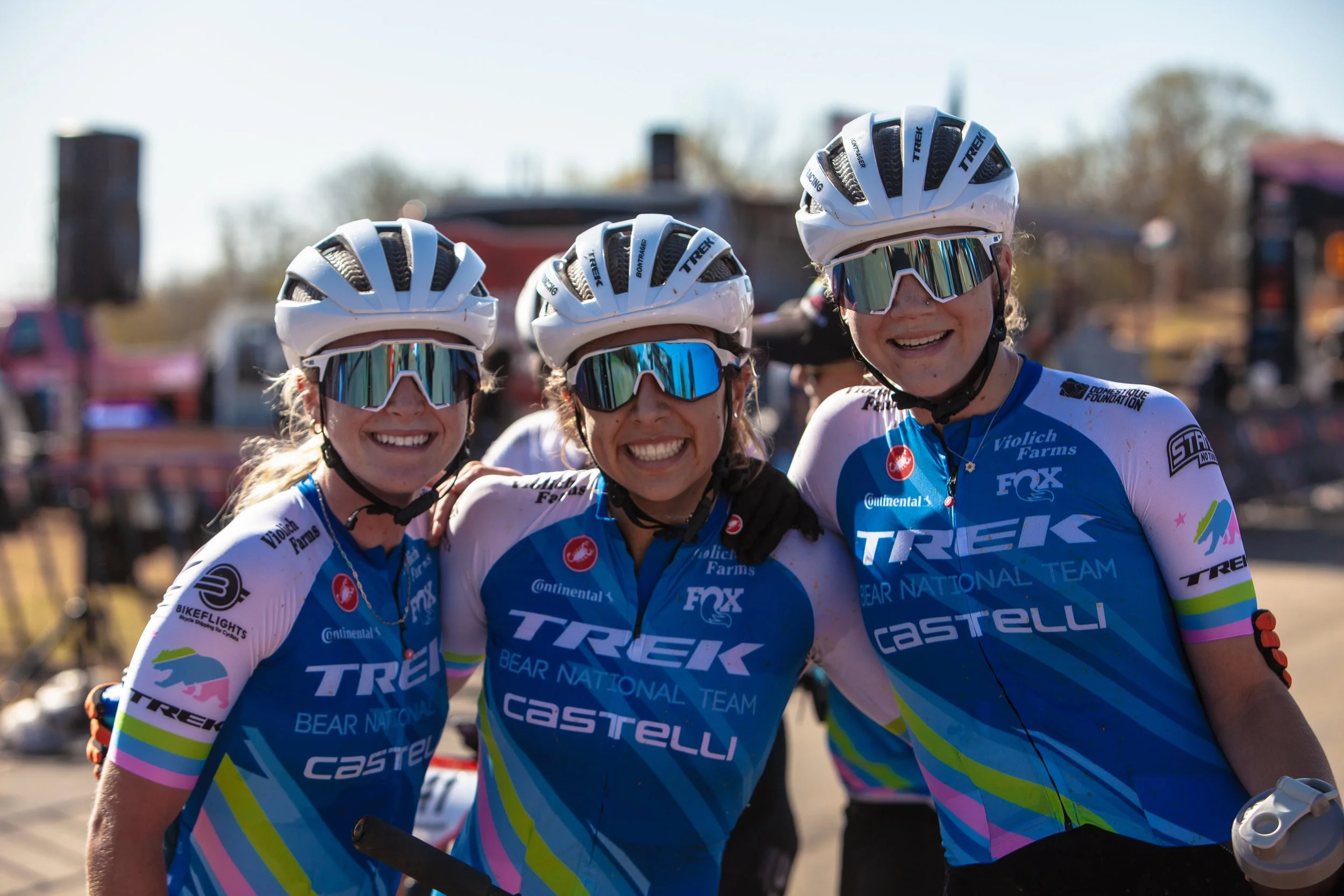
The Bear National Team has long been held as the closest thing to “Pro” for young athletes in Northern California and National Cross Country competition the nation-over. The Blue and Pink uniforms leave a noticeable impression on any starting line, usually filling the front of the field.
Growing up in the sport of Cross Country Mountain Biking, competitors quickly placed a target on the backs of those jerseys, marking the wearer as someone to stick to and hopefully beat. Not that this was an easy feat, especially considering their sheer numbers.
Bear actively recruits athletes from across the United States and often sponsors riders from U.S. Territories. For the 2022 mountain bike season, Bear has 46 riders on the roster split between the U23 Elite teams and the U18 Club and Race teams. This year’s roster pulls from 16 U.S. States, with Colorado and California being the two with the highest concentration of riders.
“All the kids on Bear seemed like professionals already, and they definitely seemed pretty distant.” U18 Bear rider Vaila Heinemann said while reflecting on her first interactions with the team before joining. “ these are all normal people, but they're all really dedicated and really fast and really good at what they do.”
Heinemann, who races in NICA’s NorCal cycling league, joined Bear National in her sophomore year of High School after her sister was exposed to the team by a friend. Now a senior and soon to be a college student, Heinemann says she has grown considerably from her time on the team.
Bear National was founded to allow aspiring young athletes to get to the top reaches of the sport in a similar way to European development programs. However, where most international programs have significant national support, Bear operates with support from donations and corporate sponsors.
Because of an abundance of support for the team, Bear National can provide opportunities to athletes of all backgrounds to compete at the highest level professionally. Bear is also able to expose their athletes to other professional athletes, allowing them to learn the tricks of the trade from a young age.
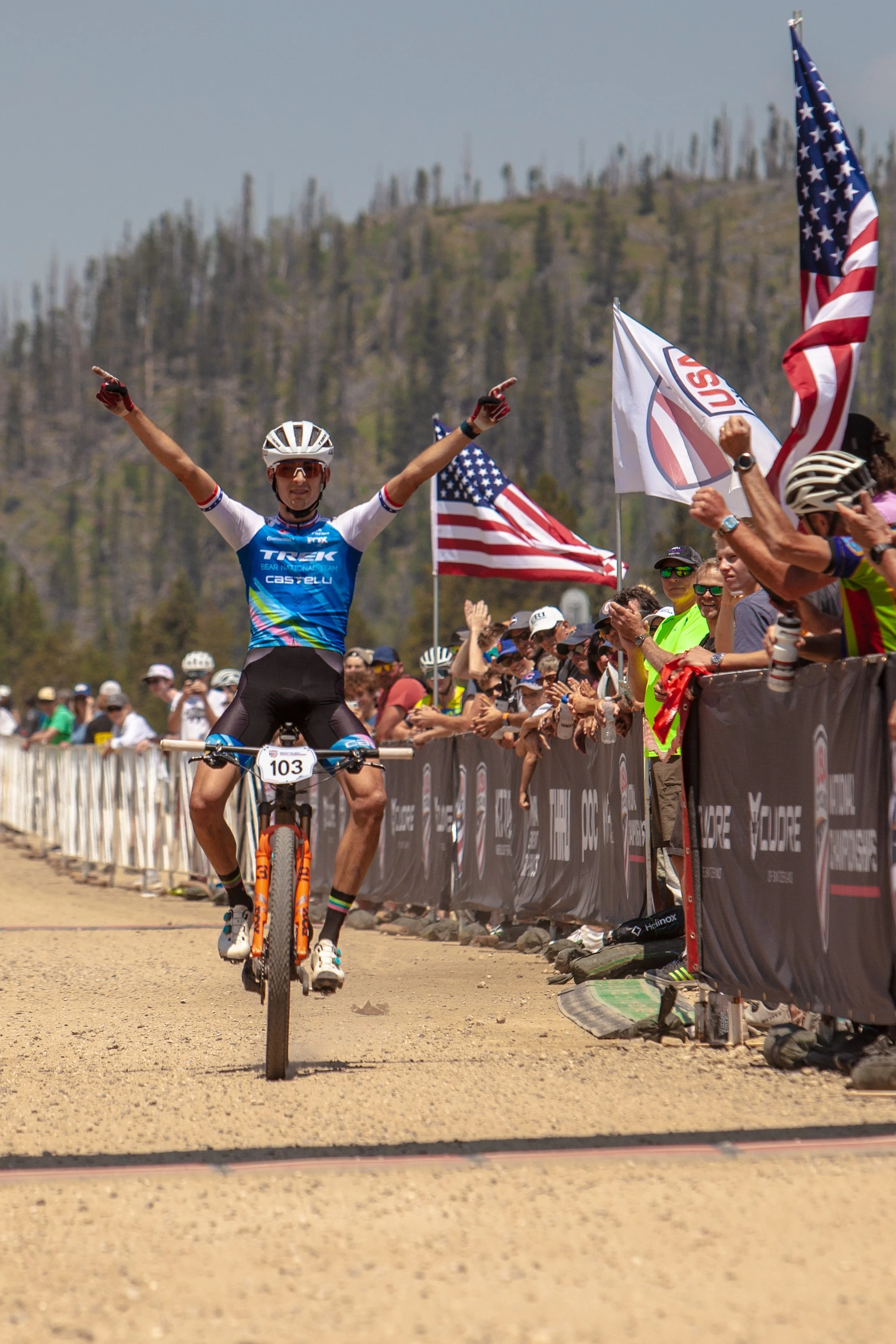
Riley Amos celebrates his victory at the 2021 Cross Country National Championship in Winter Park, Colorado last June. Amos graduated out of the Bear program and is now racing for Trek Factory Racing in 2022.
[Photo: Alec Levy-O’Brien]
“The sport kind of helps you grow and mature and definitely take on quite a bit more responsibility in a good way ... it helps you kind of realize how much the pros are dealing with, but then kind of finding a way to make them realistic for someone like me.”
— Vaila Heinemann, U18 Junior Rider
“The sport kind of helps you grow and mature and like definitely take on quite a bit more responsibility in a good way,” Heinemann says. “it helps you kind of realize like how much the pros are dealing with, but then kind of finding a way to make them realistic for someone like me.”
Additionally, Bear creates an opportunity for aspiring professionals to race on the international circuit and represent the USA in World Cup events in select cases. This was part of the draw for U23 Women’s Rider Ruth Holcomb, who was eager to get to the next level of racing when she joined Bear at 14.
“It seemed like a really serious team and, I don't know, they definitely seemed like they were the top level and what I wanted to be,” Holcomb said, “I guess I really knew nothing about bike racing or anything.”
Holcomb, now a freshman at Fort Lewis College in Durango, Colorado, has proven she is pro-ready both on and off the bike, winning the Cross Country National Championship in 2021.
“They kind of help you see how it's possible to go from like racing NICA to racing at worlds and like racing at the top level,” Holcomb said, “I think the resources that Bear gives us of like, helped like make these things that don't seem possible, possible.”
Bear is also exceptional at delivering athletes from the development to the professional stage, no matter the skill level. Names such as Riley Amos (Trek Factory Racing) and Bjorn Riley (Trek Vaude) have made their way from scrappy XC racing in Colorado to the professional level in a manner of a couple of years.
Caleb Swartz is another example of a Bear rider turned professional, with the Elite Cyclocross and Cross Country racer signing to the NEFF Cycle Sport - Giant team for the 2021-22 cyclocross season this past winter.
“I think I came in with a lot of those skills already. Um, and I think that they, you know, being on Bear really helped cultivate those and grow those even more.” Swartz said, “but then yeah, being on Bear, you know, and really having the tools and the resources to apply those skills and grow those skills at a high level.”
The Madison, Wisconsin native had already experienced quite a few races before joining the team, including bumming rides to races and organizing his pre-race service for his equipment. However, with Bear taking care of the mechanical and financial aspects of race day, Swartz was able to increase his focus on personal preparation and mental health.
Despite being a rather polished product going into the team, Swartz was able to take away several key lessons that have shaped his professional career today. “I think the first lesson is the importance of, you know, your support network, your web,” Swartz said, “it's an individual sport, but it's really not. I mean, when you look at that web of connection, and that outsourcing of who's doing what for you. It's just immense.”
Swartz has proven his ability to ride and his ability to self-manage, earning him sponsorship and crucial opportunities to race in both the National and International race circuit. Sadly, however, the opportunity to do just that is not always accessible to everyone.
Women’s cycling programs beyond the U23 stage are exceedingly rare, despite a plethora of American talent deserving of an international race seat. This is something that Bear Director Julia Violich has been trying to battle, and a concern that has been weighing on the mind of Junior racer Vaila Heinemann.
As a member of Bear, Heinemann has been continuously exposed to professional racers from the United States thanks to the team’s wealth of connections in the industry. Athletes and Olympians have made regular appearances at team meetings and group functions.
“I think that I've kind of been sheltered in a way, like watching people like Kate Courtney and people like Haley Batten,” Heinemann said, “they're a good ambassador of the sport and it seems like they don't have much trouble.”
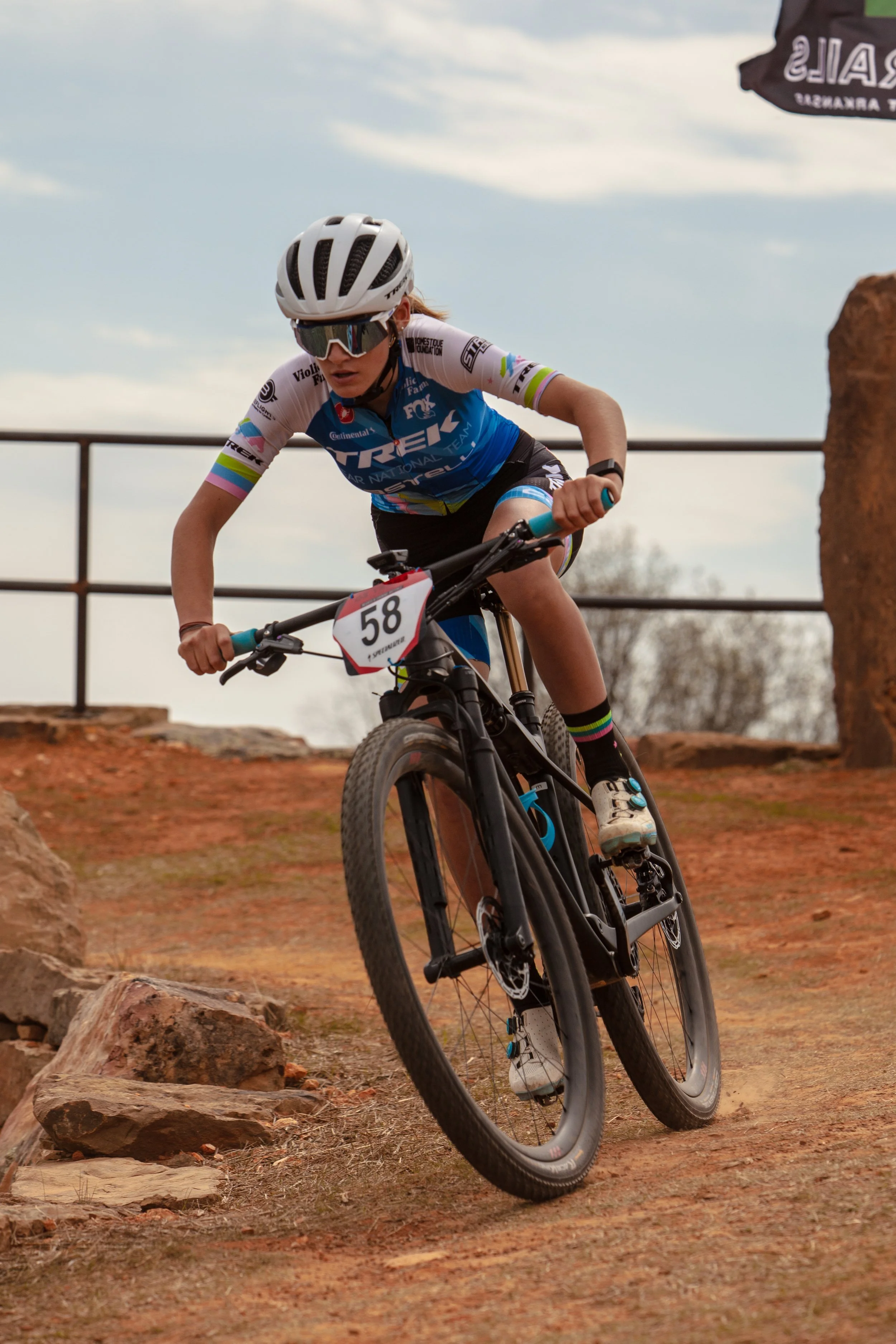
U18 Junior Bailey Cioppa races around the final corner at the Oz Trails Fayetteville Cup in Northern Arkansas in April 2021.
[Photo: Alec Levy-O’Brien]
Despite having interactions with these athletes, Heinemann is still concerned about the future she has in the sport. Violich does her best to make sure her athletes have a in-depth understanding of what a professional career could look like. However, concerns about the future have a habit of cropping up.
“Who would I go to if I wanted to be a professional cyclist and I wanted to like, get a contract and all that?” Heinemann said, “You know, like if I wanted to do that, like, I think I could do that … but I do still think that it is, um, It is still harder.”
The lack of resources available to female athletes after the development stage is a continuing deficit, one that requires collaboration from the greater cycling community. “I need to think about where I spend my energy; what really helps me both as a person and as an athlete and as a student.”
The Audio
The Bear National Team and the broader Development world greatly benefit from a significant number of professional physiologists, nutritionists, and former professionals who can help shape and direct the careers of aspiring young athletes. Several of these professionals made themselves available to me throughout the course of this project, allowing me to gain a better understanding of the industry.
Alongside these coaches and professionals, active and former Bear National team athletes took the time to describe the industry to me from their perspective. I am grateful for the opportunities this project has presented me and the interactions I have had because of it. Below are some of the audio clips found in the main articles, plus some bonus excerpts from my interviews.
Julia Violich - Bear Director
Julia Violich has been with Bear National Team for more than ten years, seeing it through it’s infancy and into the development powerhouse it is today. Julia has long been a steward of sport, creating development teams and funding scholarship opportunities for students at her Alma Mater, the University of California, Berkley. Violich’s depth of experience stems for years as a competitor herself, racing for the US National team in Cross Country Mountain Biking’s hayday. Below are selected clips from my interview with the Bear Director and former USA Cycling Board Member.
Caleb Swartz - Former U23 Rider
Caleb Swartz is a former U23 Elite rider with Bear National Team. After joining in 2019, Caleb experienced a superb four-year stint with the team, eventually graduating to his own Professional Cyclocross racing team with Giant Bicycles and NEFF Cycle Service out of his hometown of Madison, Wisconsin. Caleb admits he was already a fairly polished athlete prior to joining the team, but still benefitted greatly from the support structure developed by Bear and the opportunities presented by the team. Swartz is a perfect example of the development stage in cycling at work, turning an eager and avid cyclist into a professional athlete without burnout or degrading interest in the sport.
Julie Young - Sports Physiologist / Former Pro Cyclist
Julie Young made a name for herself in the 1990’s as part of the US National Cycling Team. Today, Young is a Sports Physiologist out of Reno, splitting her time between running a lab and training aspiring professional athletes. Young has worked with Bear Athletes for a handful of years now, learning how the development stage impacts young athletes and helps shape their careers for years to come. During the COVID-19 Pandemic, Young began providing bike fittings to Bear athletes, an essential process to ensure athletes don’t walk away from their careers with any unforced injuries.
Ruth Holcomb - U23 Elite Rider
Ruth Holcomb has been the leading name in U23 women’s cycling since the start of the pandemic. The young talent has proven herself both on and off the racetrack, demonstrating a deep passion for the sport and a hunger for podium results on race day. Her racecraft earned her the National Championship in U23 Cross Country at the 2021 MTB National Championship in Winter Park, Colorado. Holcomb balances the demands of a racing career with school, attending Fort Lewis College in Durango Colorado.
Vaila Heinemann - U18 Rider
Vaila Heinemann has been a perfect example of the kind of rider the Bear National Team desires: hardworking, driven, and passionate about the sport. Heinemann has long been exposed to Julia Violich’s work as a high school athlete at Redwood High School in Northern California where Violich has long volunteered. The young rider was not always thought of pursuing a professional career but maintains that it is of interest as she moves to graduate from high school in 2022.
Vanessa Hauswald - NorCal Cycling Director
Vanessa Hauswald lives for the bike and loves to share it with anyone willing to listen. The sitting NorCal Cycling Leauge Director has taken significant strides to ensure every kid has the chance to get their butts on a bike and experience the sport that has given her so much over the years. As director of NorCal, Hauswald has seen unprecedented growth in the Northern California Cycling industry, with thousands of kids participating in the league’s races annually.
Rob Evans - Former Pro Cyclist
Rob Evans is part of the original Bear crew from back in the early 2000s. Spending time in college with Stu Bone getting their butts kicked by young guns with nowhere to race, Evans helped Bone form the original Bear Development Team. As a professional athlete himself, Evans wanted to help give young athletes an opportunity to get to the professional level. Although he is no longer part of the team in an official capacity after stepping down in 2012, Evans maintains a connection with the team as an athletic advisor.
The Literature Review
Alp d’Femme: The Uphill Struggle to Become An Elite Cyclist
By: Alec Levy-O’Brien
Section 1: Introduction
Some of the greatest and most dominant names in cycling come from the most humble beginnings, oftentimes without a formal path to the sport. In a sport as tradition-oriented as cycling, the rider that thinks out of the box to get to the top is not always revered at first. However, they soon find themselves surrounded by fans and friends supporting their aspirations. This is a fairly standard ark that we come across in professional men’s cycling. However, it is not often found in women’s cycling, with resources and investment scattered and scarce. Rising female cyclists have far fewer opportunities to get to the professional level than their male counterparts
Since I was a little boy, I have dreamt of becoming a professional cyclist. I stared longingly at the TV screen while names such as Contador, Schleck, and Wiggins danced up the French Alps. Their names will always be imprinted in my mind, even now that I have hung my aspirations up. Something I had not engaged with before on the other hand, was women’s cyclists. I had caught highlights and glimpses of women’s racing on the internet but never had I had the chance to see one of their races live. The women’s racing calendar did not have a Tour De France, nor did it have a Paris Roubaix. Cycling has stood on a platform of inclusivity, promoting efforts to develop the next generation of cyclists, yet there has been little waiting for young women fighting tooth and nail to become a professional cyclist. Racing bicycles in High School, I was exposed to a fair amount of both male and female professional cyclists at varying stages of their careers. Many had a unique story to tell, but not every account was one of success.
The worldwide cycling community is sizable and a large share of its members are women. I grew up racing bikes in California and many of my female friends expressed a desire to further their careers in the cycling world but were unsure how to. For young boys, there are clearly outlined expectations that need to be fulfilled to reach the next step. Get results, find a coach, practice your skills, apply to development teams and academies. For the girls on my high school mountain bike team, the road was less clear. Yes, there were development teams that recruited from the female ranks of rising cyclists, but so few have made it to the top and even fewer have shared their journey.
Women in professional cycling rarely receive the same level of attention, pay, racing opportunities, or sponsorship opportunities as their male counterparts. In some cases, women’s events have been shut down because of a perceived threat to a men’s event being held on the same day. With ruling bodies urging teams to open up women’s outfits and event organizers to hold women’s races, few exist in reality. This ongoing issue has affected nearly every level of professional cycling, with countless female athletes speaking out and pleading for more opportunities to be made available to athletes willing to risk everything they have achieved to get to the next level.
The reflections of current and former athletes will help provide a history of where cycling has come, and what state it is currently in. My research will also help provide the context in which professional female athletes operate and how they view the profession in which they are trying to break into. While many facets of life have opened up and allowed women to increase their standing and level of opportunity, the cycling world lags, either unable or unwilling to accept change and accept women as a broader part of their community.
Section 2: Literature Review
The topic of gender inequities in professional cycling is not a widely researched field, unfortunately. Previous research on this topic is sparse, with much of my findings being centered around the first-person experiences of former and current professional and amateur cyclists.
In this literature review, I will begin by identifying women’s historical role in the cycling industry, evaluating research into their roles and diverse experiences in different cultures. By examining how the role of female cyclists through history, we will be able to better understand how the role of women in cycling has changed over time and how it can potentially impact the future of cycling. Next, I will research the systemic and political issues that are restricting women from making it to the top level of cycling. Both USA Cycling and the international governing bodies of cycling have received scrutiny in the media for their rather lacking support for women’s professional cycling. With these findings, I will move on to researching how participation in cycling by diverse communities is affected by access to resources, and how a lack of which can prove to be detrimental to the sport. Finally, I will examine contemporary examples of women’s representation within the cycling industry. This will be key to understanding how experiences differ and if there are potential routes that provide a freer path to success. This evaluation of past research paired with the accounts of current and retired professional cyclists will help us further understand the organizational and structural roadblocks that rising professional cyclists face as they pursue a career in the cycling industry.
Section 2.1: Historical Accounts and Representation of Women in Cycling
Following the first World War, women in Britain faced a return to the degrading status they once carried. A status that saw them with fewer rights than their male counterparts, a step away from second-class citizens. Fighting back against the societal expectations of a pre-world war Britain, British women fought for their emancipation and right to live as equal amongst men. During this time, leisure became a new commodity, with many young men and women splitting their time between an increasingly stringent work schedule and an expanding leisure market. Neil Carter argues that cycling became a dominant outlet during this period, offering women an expanded reach into the physical culture. Beginning during the first World War, women’s cycling began to take off as previously unemployed housewives were called to work in factories to supply the war effort and the country in their time of need. With half the workforce being made up of women by 1916, the most reliable form of transportation from home to the factories was by bicycle (Neil).
Following the explosion of women into the workforce during the first World War, cycling became the most widely used form of non-motorized transportation throughout the country. However, this did not strengthen the public perception of the bicycle, with its familiarity amongst the working class riding to and from work causing distaste in some. Nevertheless, the number of cyclists in the country rose from 5 million in 1223 to near 12 million in 1939, a period in which more than 2 million bicycles were built (Neil). Not only had ridership more than doubled, but the number of clubs and participants had increased as well, meaning more were interested in what cycling had to offer beyond a source of transportation. Characteristically, however, debates about women’s participation in cycling grew louder, with arguments over appropriate lengths for events and apparel, with doctors even questioning the rationale behind cycling for so-called “refined women”.
Despite these arguments, the growth of women’s cycling was profound, with records being broken and new distances being reached by the best and brightest. It was even noted in the early 1920s that women were riding far better and longer than they had ever done before. It is no surprise then that the number of female-only road racing clubs exploded during the 1920s as more and more women devoted parts of their lives to the sport and the pursuit of greatness. By 1939, women’s cycling had reached a pinnacle moment, with more women competing than ever before and women’s events expanding to track cycling, a highly competitive subgenre of the sport which takes place in an elevated arena. During this same period, men’s cycling saw a dramatic decrease, resulting in increased coverage from local and national cycling news sources directed at women’s events. Neil argues that the increased coverage of women’s cycling garnered them more respect and national recognition amongst men, despite the sport of cycling remaining a minor sport in the country.
Section 2.2: Systemic Issue in Professional Cycling
Despite a strong history of female participation in Britain following the first World War, trends have not continued elsewhere. In Spain, sporting federations have been criticized for not doing enough to draw the attention and participation of female athletes. This has been a particular problem for the Royal Spanish Cycling Federation (RFEC), which plays host to the Vuelta a Espana, one of three major races in the men’s cycling calendar. Statistics from 2014 suggest that the gap in participation is considerable. Out of the 66 regional and recreational cycling federations in Spain, only 20.9% of cycling licenses issued to members belong to women, with more than 2.6 million licenses belonging to male athletes. Leruite suggests that this may be due to gender-related stereotypes that define male archetypes of strength and dominance over women.
While female cyclings in Britain were racing in sanctioned events before World War II, RFEC did not sponsor its first women’s event nor issue licenses to women until 1977, eighty years after its founding in 1896 (Leruite). Progression has not moved far from the late 70s, with participation, achievement, and representation at a shocking low. As of 2014, the RFEC had not appointed a female president to a regional cycling federation position, nor has there been an increase in professional women’s teams. Of the 6 Spanish cycling teams participating in the highest levels of the sport, only two are women’s teams, and one of those is a subsidiary of the largest men’s team, Movistar Team. These statistics are shocking, especially considering that in 2013, the Union Cycliste Internationale (UCI) appointed its first female vice-president (Leruite).
RFEC staff members have reported frustrations within both the ruling organization and on race-day, with all interviewed by Leruite in 2014 agreeing that female participants do not receive enough attention and recognition within the sport. Much of the frustration from female athletes stems from the racing format that they are subjected to. In events that have both a men’s and women’s field, male competitors set off five minutes before the women set off, leaving the potential for the stronger women’s competitors to overtake parts of the men’s field. These sorts of scenarios can be potentially dangerous for the leading groups as having to navigate riders who are not a part of the same race can be distracting and lead to accidents (Leruite). Spanish road cycling is also turning away from the standard road-race competition, instead focusing on the recently minted “leisure-competition” events, a style that better promotes tourism to the detriment of women’s cycling in the country. Paired with decreasing sponsorship opportunities, fear is spreading amongst RFEC staff that women’s professional cycling could be nearing its end.
Leruite argues that because of the decreasing amount of events, teams, and resources, Spanish female competitive cycling has become a warning signal to the rest of the industry. Rampant discrimination against women has slowed involvement in the sport, causing stagnation and frustration within the sporting field. Leruite contents that Spanish cycling needs to have another renaissance period as it did when it first approved licenses for female participants in the 1970s. By revitalizing the internal culture of the federation, there is a potential to uproot the discriminatory practices and increase involvement at all levels of the sport by allowing women to operate more equitably.
Section 2.3: Resource Access and Participation in Professional Cycling
As with many established sports in contemporary history, cycling’s gender gap is fairly consequential. Much of this is due to several key factors which can inhibit certain demographics and populations who are susceptible to mitigating factors. Much of this has to do with the overhead costs associated with the sport. Unlike sports such as baseball and soccer, there are few racecourses and training centers in the United States, often with hundreds of miles separating them. This can be a fairly daunting physical barrier to entry, as it is common for racers to have to travel to different corners of their state and country to participate in high-level competitions.
Equipment costs are also a considerable hurdle, with the price of a race-capable bike ranging in price from $1000 to upwards of $11,000 depending on the features and equipment attached (Gulley). These costs climb from here, with clothing, helmets, shoes, and repair parts bringing costs up significantly higher for something in useable condition. Now in some spaces in sport, this issue might be easily overlooked. However, in women’s cycling, sponsorships, grants, and scholarships are few and far between, leaving these costs to the athletes before entry into the competitive levels of the sport (Ayala). Race entry fees are also a serious issue, with many female athletes surveyed in 2019 stating this to be a constraint within the sport alongside training and equipment costs (Ayala).
The same study researched what experiences increased participation amongst female participants, the major motivator being Encouragement and Support according to 36.73% (Ayala). Field Decisions and Equal Prize Money were close behind, the latter of which highlights the importance of fans at a racing venue. Participants noted that while many fans showed up to watch men’s events, the encouragement they received during their races helped tremendously through feelings of acknowledgment and recognition(Ayala). Following along the themes of equity and inclusion, equal prize offerings for both male and female participants greatly increased satisfaction amongst female competitors, with almost half of those surveyed noting feelings of appreciation and respect through actions such as these. According to Ayala, these findings suggest that through increased fan involvement and equalized pay amongst athletes, women will be better incentivized not only to participate in cycling but more willing to engage in races as well.
Section 3: Creative Project Overview
To better understand the context in which female cyclists operate, I must spend time with female professional athletes and prominent figures within the sporting space to better understand the systematic issues of prejudice firsthand. It is my goal while with these athletes to better understand their unique path to where they are in their careers, and hear in their own words what obstacles were left in their path.
Every athlete is unique, and it is essential to showcase the features that set them apart from the rest of the field. To do this, I would like to spend time in the athlete’s native environment, documenting their chosen genre of cycling through photography and interviews with both the athletes and any coaching staff they are close with. Documenting with photographs is an essential aspect of this piece as emotions and passion cannot always be communicated through written words.
Through this project, I hope to shine a brighter light on the female athletes working hard to not only elevate their careers but help empower future generations to join the cycling industry. With a focus on equality and increasing access to resources such as sponsorships and training opportunities, I hope to help encourage both brands and ruling bodies to divest their resources into furthering opportunities for female cyclists.
In an ideal world, these individual stories would be published in a cycling magazine or other news platform that has the ear not only of cycling fans but also organizations and companies within the cycling industry. Publications such as Outside Magazine, Peloton, and Velo News have the potential to be a healthy springboard for a project such as this, with each holding its level of connection with the cycling community. Outside, in particular, would be a great platform for this project, potentially bringing greater attention not only to women’s cycling but the broader conversation of inequities in professional women’s sport across the board. Outside Media’s sizeable resources and diverse readership would hopefully be helpful in not only spreading awareness via word of mouth but at the corporate level as well.
At present, I do not have very close connections with many athletes that I would consider interviewing and researching for this project. However, I have worked closely with several cycling teams that have been working hard to make sure the next generation of professional cyclists, namely Bear National Team out of California. Owned and operated by former professional cyclist Julia Violich, Bear National offers opportunities for promising young athletes interested in a career in professional mountain biking. The team, which specializes in the development of junior athletes ranging in age from 13 to 21, promises exposure to some of the largest names in professional cycling as well as access to cutting-edge equipment and training resources. Julia has made it her mission to allow every athlete to prove their worth at the highest level of the sport, no matter the cost. Individuals such as Julia are who I am targeting in this project, as their work is what is pushing women’s cycling upward.
Section 4: Works Cited
Ayala, Erin E., et al. "Experiences That Affect Participation of Women and Gender Diverse Athletes in Competitive Cycling." Journal of Outdoor Recreation, Education and Leadership, vol. 12, no. 1, spring 2020, pp. 10+. Gale Academic OneFile, link.gale.com/apps/doc/A614028239/AONE?u=coloboulder&sid=summon&xid=c6f5040
Carter, Neil. “Marguerite Wilson and Other ‘Hard-Riding … Feminine Space Eaters’: Cycling and Modern Femininity in Interwar Britain.” Sport in History, September 27, 2020, pp. 1–23, DOI: 10.1080/17460263.2020.1823876.
Leruite, Mayte. “Analysis of Gender Policies of the Spanish Cycling and Triathlon Federations from the Point of View of Representative Athletes and Expert Technicians”. Journal of Science and Cycling, vol. 3, no. 3, November 2014, pp. 34-43, https://www.jsc-journal.com/index.php/JSC/article/view/164.
Gulley, Aaron. “How Much Should You Spend for a Good Road Bike?”. Outside Online, August 4, 2017, https://www.outsideonline.com/outdoor-gear/bikes-and-biking/how-much-do-you-need-spend-good-road-bike/